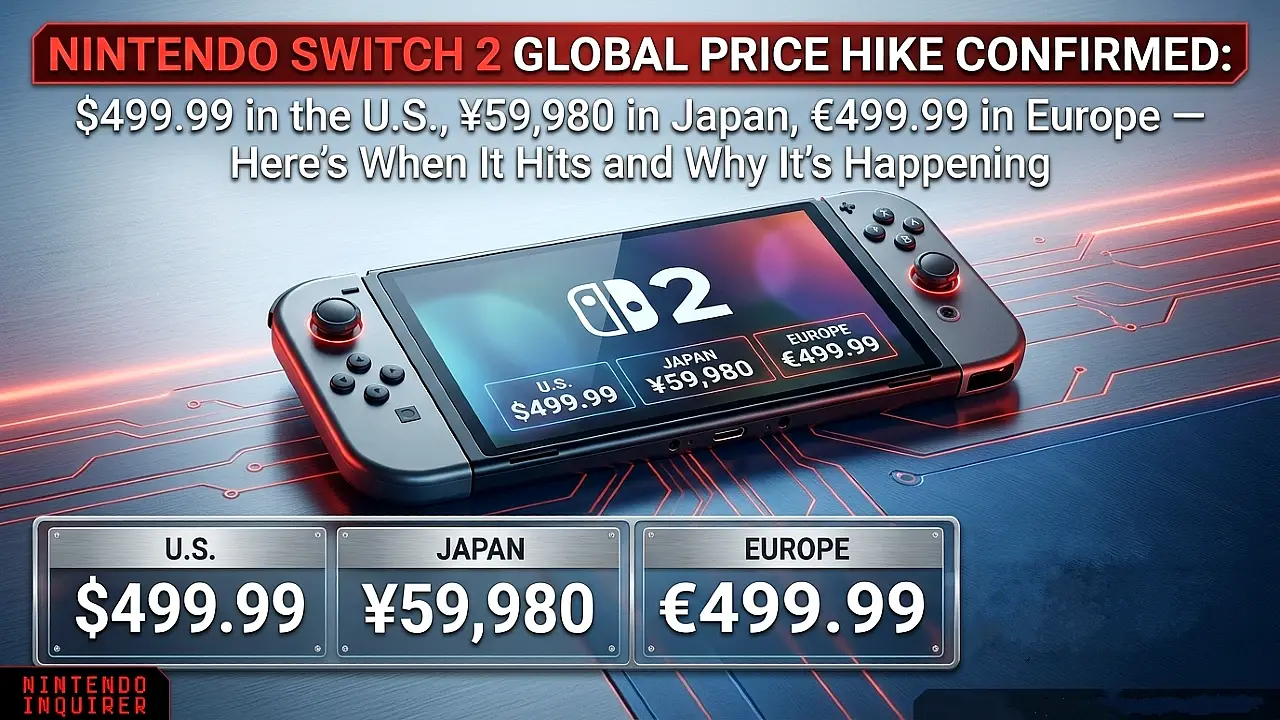
Nintendo has confirmed what many fans feared: the Nintendo Switch 2 is getting a global price increase. The announcement, embedded in the company’s fiscal year earnings report on May 8, 2026, means the console will soon cost more in every major market.
The hikes are staggered by region. Japan absorbs the blow first on May 25. The United States and Europe follow on September 1. If you have been waiting to buy a Switch 2, the window for the current price is closing.
Here is everything you need to know about the new pricing, why it is happening, and what Nintendo’s leadership is saying about it behind closed doors.
The New Prices: Region by Region
The price increase is global, but it takes effect on different dates depending on where you live.
| Region | Current Price | New Price | Increase | Effective Date |
|---|---|---|---|---|
| Japan (Japanese-language model) | ¥49,980 | ¥59,980 | +20% (¥10,000) | May 25, 2026 |
| United States | $449.99 | $499.99 | +11% ($50) | September 1, 2026 |
| Canada | $629.99 | $679.99 | +8% ($50 CAD) | September 1, 2026 |
| Europe | €469.99 | €499.99 | +6% (€30) | September 1, 2026 |
| United Kingdom | £395.99 | £429.99 | +9% (£34) | September 1, 2026 |
Key takeaway: Japanese consumers face the steepest percentage increase at 20%, and the change arrives first—less than two weeks from today. U.S. and European buyers have until September 1 to purchase at the current $449.99 / €469.99 price point.
Why Is This Happening? Three Overlapping Forces
Nintendo did not raise prices on a whim. Three converging factors made the decision unavoidable from the company’s perspective.
1. The Memory Chip Shortage (The Biggest Culprit)
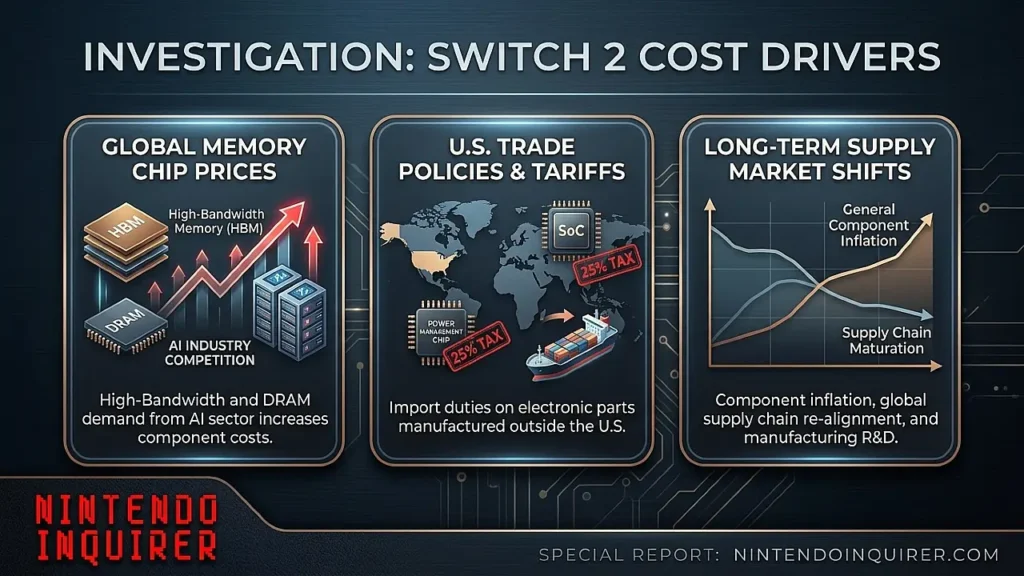
The single largest cost pressure on Nintendo is the dramatic surge in memory chip prices, driven by the artificial intelligence boom. AI data centers consume massive quantities of the same high-bandwidth memory chips used in modern gaming hardware. Demand has spiked. Supply has not kept up.
Nintendo estimates that rising memory costs and related tariff expenses will hit the company by approximately ¥100 billion (roughly $638 million) during the fiscal year ending March 2027.
That is not a minor line item. It is a significant chunk of the company’s expected profitability.
“Nintendo and Sony both flagged the impact from surging memory prices on their games businesses,” as the AI boom “constrains chip supply and deepens disruptions across the tech sector.”
2. U.S. Tariffs
President Donald Trump’s tariff regime continues to raise costs for all major Japanese exporters, and Nintendo is no exception. The company specifically cited “the impact of higher memory prices and US tariffs” as a combined drag on margins.
Nintendo is particularly exposed to tariffs because, unlike Sony—which has a diversified business spanning music, movies, and insurance—Nintendo depends almost entirely on its core games business for revenue. There is no other division to absorb the blow.
3. A Structural Shift, Not a Temporary Blip
Nintendo President Shuntaro Furukawa addressed the price increase directly during a recent investor meeting, and his comments reveal the company’s long-term thinking.
“If the cost increase were temporary and expected to subside relatively quickly, we could have pursued corporate efforts such as improving production efficiency and aimed to expand the installed base while maintaining the hardware price,” Furukawa said. “However, given the recent surge in component prices, particularly memory, and the trends in exchange rates and oil prices, we believe that these market environment changes are expected to continue for the medium to long term.”
In plain English: these costs are not going away, so Nintendo cannot absorb them forever. The company views this as a permanent shift in its cost structure, not a temporary crisis.
Furukawa’s Candid Admission: “This Will Raise the Barrier to Purchase”
In a rare moment of candor, Furukawa acknowledged the most uncomfortable reality of the price hike: it will put the console out of reach for some potential buyers.
“We haven’t discussed the specific impact this price change will have on Nintendo Switch 2 sales, but we understand that it will raise the barrier to purchase to some extent.”
He immediately pivoted to what Nintendo sees as the solution: compelling software.
“The most important thing in the gaming console business is to provide engaging gameplay that offers value beyond the price. We and our software partners will continue to release various titles, and we aim to expand the market by conveying these titles along with the new experiences unique to the Nintendo Switch 2.”
The logic is simple and, historically, sound. The original Switch launched at 299.99 in 2017,a price point that did not stop it from selling over 141 million units when the games were right.Whether the same holds true at499.99—a price that pushes into PlayStation 5 and premium tablet territory—remains to be seen.
The Financial Picture: Profits Up, Stock Down
Nintendo’s fiscal year 2026 (April 2025 through March 2026) was, by raw numbers, a massive success.
| Metric | FY 2026 (Ended March 2026) | Year-over-Year Change |
|---|---|---|
| Net Sales | ¥2.3 trillion ($15 billion) | +99% |
| Net Profit | ¥424 billion ($2.7 billion) | +52% |
| Switch 2 Hardware Sales | 19.86 million units | — (Launch year) |
| Switch 2 Software Sales | 48.7 million units | — (Launch year) |
These are genuinely impressive figures. Revenue doubled. Profit surged more than 50%. The Switch 2 launch was one of the fastest-selling console debuts in Nintendo’s history.
However, the outlook for fiscal year 2027 (ending March 2027) is where things get complicated.
| Metric | FY 2027 Forecast | Year-over-Year Change |
|---|---|---|
| Net Sales | ¥2.05 trillion | -11.4% |
| Hardware Sales | 16.5 million units | -17% |
| Software Sales (combined) | 165 million units | -11% |
This is the forecast that spooked investors. Nintendo’s stock fell 8.44% in Tokyo on May 11, its steepest single-day decline in three months, and has dropped more than 30% since the start of 2026.
The paradox is real: Nintendo just reported one of its best fiscal years ever and is projecting a revenue decline for the year ahead. The market does not like that combination.
Analyst Reaction:
Serkan Toto, CEO of Kantan Games, described the situation bluntly:
“The clock has been ticking for Nintendo for months now; the impact is really significant because generally, the sales increase in their second year and not decrease like Nintendo predicts.”
Billions of dollars in market value were erased as investors processed the cautious guidance and the implications of higher pricing.
Unannounced Games: Nintendo Promises More Is Coming
One of the quieter but significant revelations from Furukawa’s investor Q&A is that Nintendo has “new titles prepared for the second half of this fiscal year, in addition to those already announced,” with details to arrive “at the appropriate time.”
This comment has immediately reignited speculation about major unannounced projects:
| Already Confirmed (Summer 2026) | Strongly Rumored (Holiday 2026/2027) |
|---|---|
| Yoshi and the Mysterious Book (May 21) | The Legend of Zelda: Ocarina of Time Remake |
| Star Fox (June 25) | Fire Emblem: Fortune’s Weave |
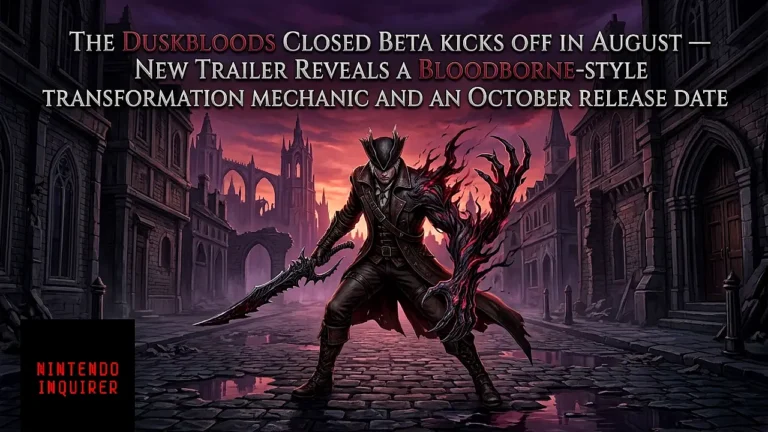
| Rhythm Heaven Groove (July 2) | The Duskbloods (FromSoftware exclusive) |
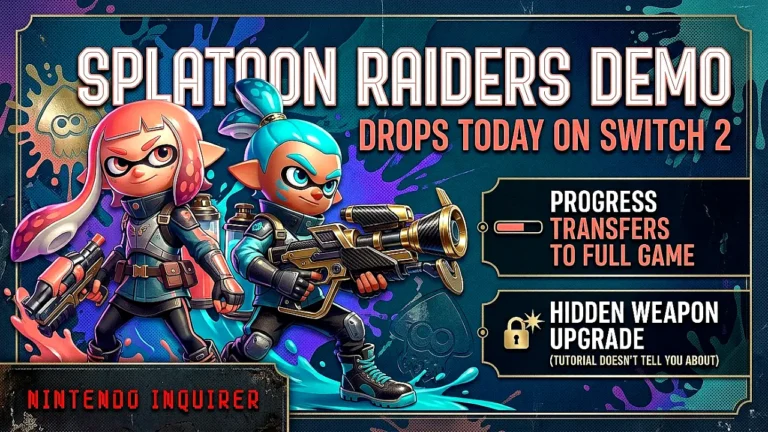
| Splatoon Raiders (July 23) | Next 3D Mario (rumored for 2027) |
The rumored Ocarina of Time remake gained additional credibility when leaker Nate the Hate—who accurately predicted the Star Fox announcement—listed it among Nintendo’s 2026 projects. With Star Fox now officially confirmed, the Zelda remake looks increasingly likely to be the holiday centerpiece Nintendo needs.
What This Means for the Switch 2’s Trajectory
The price hike introduces genuine uncertainty into the Switch 2’s second year.
The Bull Case:
- Nintendo historically issues conservative forecasts. The company originally projected 15 million Switch 2 units for the launch year and ultimately delivered nearly 20 million.
- Pokémon Pokopia has been a breakout hit, selling more than 4 million units in its first five weeks and driving hardware adoption.
- The upcoming software pipeline—Star Fox, Splatoon Raiders, Yoshi, and the rumored Ocarina of Time—is strong.
The Bear Case:
- 499.99 is a new price tier for Nintendo. No Nintendo console has ever launched above349.99 before the Switch 2’s debut at $449.99.
- Furukawa’s admission that the price “will raise the barrier to purchase” is notable coming from a company that rarely acknowledges pricing friction.
- The projected decline in year-two hardware sales runs counter to historical console lifecycles, where year two typically sees growth.
The outcome depends on software. If the holiday lineup delivers—particularly the rumored Ocarina of Time remake—the price hike may be absorbed without meaningful damage to sales momentum. If the second half of 2026 is quiet, Nintendo faces a difficult conversation with investors who already pushed the stock to its lowest levels since August 2024.
FAQ: Common Questions About the Switch 2 Price Hike
Q: When does the Switch 2 price increase take effect?
A: May 25, 2026 in Japan. September 1, 2026 in the United States, Canada, and Europe.
Q: How much will the Switch 2 cost after the increase?
A: 499.99intheU.S.,¥59,980inJapan,€499.99inEurope,£429.99intheU.K.,and679.99 in Canada.
Q: Is the price increase permanent?
A: Yes. Nintendo President Furukawa has described the cost pressures as “medium to long term,” not temporary.
Q: Why is Nintendo raising the price now?
A: Three main reasons: (1) surging memory chip prices driven by AI demand, (2) U.S. tariffs on imported electronics, and (3) exchange rate pressures. Nintendo estimates these factors will cost the company ¥100 billion (approximately $638 million) this fiscal year.
Q: Is the original Switch getting a price increase too?
A: Yes. Nintendo has confirmed price increases across Switch 2, the original Switch, online subscriptions, and even “playing cards” (hanafuda and other Nintendo-branded card products).
Q: Will the price increase reduce Switch 2 sales?
A: Nintendo acknowledges that it “will raise the barrier to purchase to some extent,” but believes strong software will maintain momentum.
Q: Can I still buy a Switch 2 at the current price?
A: In Japan, sales have already surged ahead of the May 25 deadline, with some retailers selling out. In the U.S. and Europe, you have until September 1, 2026, to purchase at the current price.
The Bottom Line
Nintendo is raising the price of the Switch 2 globally, and the decision is not a reaction to weak sales or a PR misstep. It is a direct response to structural cost pressures—memory chip prices inflated by the AI boom, U.S. tariffs, and unfavorable exchange rates—that the company believes are permanent, not temporary.
The numbers are clear. Japan pays 20% more starting May 25. The U.S. pays 11% more starting September 1. Nintendo’s stock dropped 8.44% on the news, and the company is forecasting a decline in hardware sales for the console’s second year—an unusual trajectory for a platform that is still less than a year old.
Furukawa’s message to investors and consumers is the same: the games will make it worth it. Whether that proves true depends on what Nintendo announces for the holiday season. If the rumored Ocarina of Time remake and other unannounced titles materialize, the Switch 2 may weather the price hike without losing momentum. If the second half of 2026 is quiet, the conversation around Nintendo’s future gets a lot more complicated.
Will the price increase change your plans to buy a Nintendo Switch 2? Are you planning to purchase before September 1, or are you waiting to see what games arrive later this year? Let us know in the comments.
About the Author