Nintendo buried the news in a footnote.
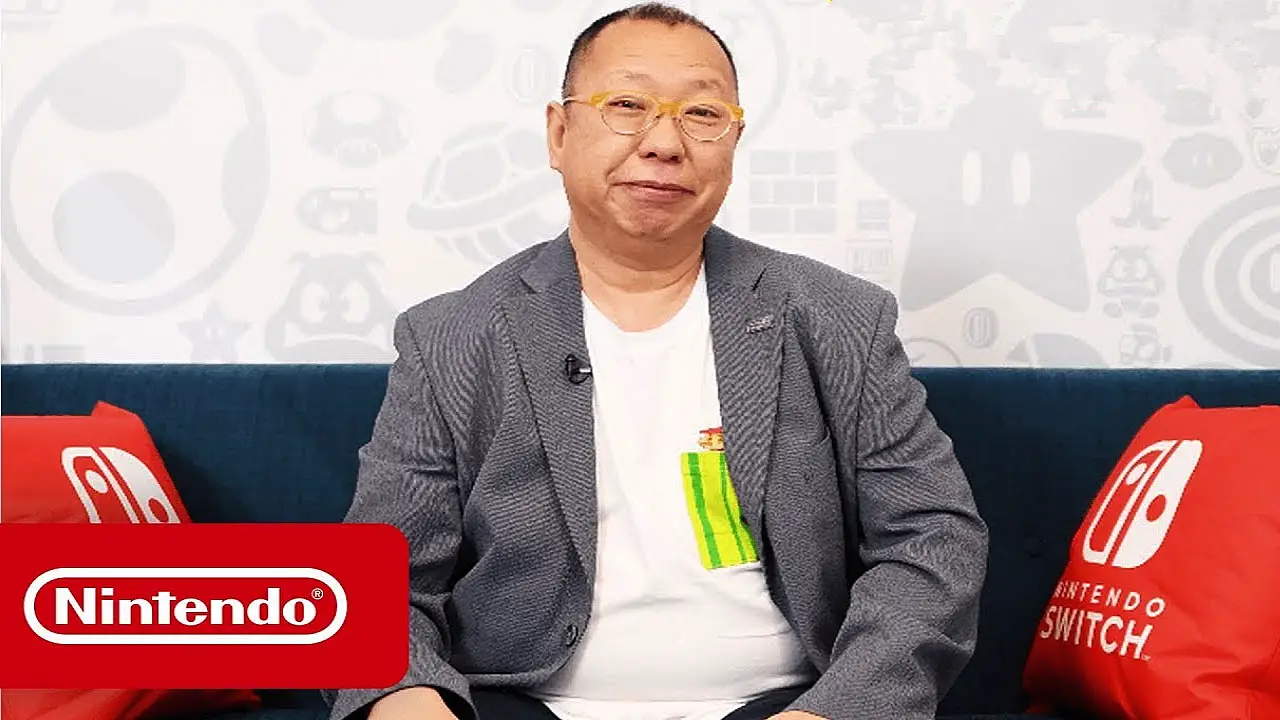
Tucked inside the company’s fiscal year earnings report on May 8, 2026, alongside revenue projections and price hike justifications, was a single personnel update that signals the true end of an era. Takashi Tezuka, one of the most important video game designers in the history of the medium, will retire from Nintendo on June 26, 2026, after 42 years with the company.
He is 65 years old. He joined Nintendo part-time in 1984 while still in university. Within a year, he was designing the game that would define the next four decades of interactive entertainment. And now he is leaving.
The Career: From Punch-Out to Breath of the Wild
Tezuka’s resume is not merely impressive. It is the foundation of modern Nintendo. He did not just work on important games. He directed and designed the games that created the templates for entire genres.
The Early Years (1984–1990):
Tezuka’s first project at Nintendo was Punch-Out!!, a part-time job he took while finishing his degree at the Osaka University of Arts. Within months, he was working alongside Shigeru Miyamoto as assistant director and designer on the original Super Mario Bros. for the NES.
One year later, in 1986, Tezuka directed the very first The Legend of Zelda. He wrote the story and script for both the original game and Zelda II: The Adventure of Link. He followed that by co-directing Super Mario Bros. 3 and Super Mario World.
| Year | Game | Tezuka’s Role |
|---|---|---|
| 1984 | Punch-Out!! | Designer (part-time) |
| 1985 | Super Mario Bros. | Assistant Director, Designer |
| 1986 | The Legend of Zelda | Director, Writer |
| 1987 | Zelda II: The Adventure of Link | Writer |
| 1988 | Super Mario Bros. 3 | Co-Director |
| 1990 | Super Mario World | Director |
| 1995 | Yoshi’s Island | Director |
The Character He Co-Created:
One contribution stands apart in its cultural impact. During the development of Super Mario World, Tezuka co-designed a green dinosaur that Miyamoto had been sketching for years. The character was originally envisioned as a horse for Mario to ride, inspired by Miyamoto’s love of country and western themes.
Tezuka took the concept and made it real. The dinosaur became Yoshi, and Yoshi became a permanent fixture of the Mario universe, eventually headlining his own multi-million-selling franchise.
The Producer Era (1996–2026):
As Nintendo transitioned from the 2D era into 3D, Tezuka’s role shifted. He moved from directing to producing and supervising, applying decades of design intuition to guide the next generation of creators.
His producer and supervisor credits span almost every major Nintendo franchise:
| Role | Notable Games |
|---|---|
| Producer | Super Mario Maker, Super Mario Maker 2, Super Mario 3D World, Yoshi’s Woolly World, Super Mario Bros. Wonder |
| Supervisor | The Legend of Zelda: Breath of the Wild, Animal Crossing: New Horizons, Pikmin 3, Super Mario 64 DS |
| Production Support | Numerous Mario, Zelda, Pikmin, and Animal Crossing titles |
Super Mario Bros. Wonder, released in October 2025, now stands as Tezuka’s final credited project as producer. It is a fitting bookend: a game that returned 2D Mario to its creative, unpredictable roots after years of the more conservative New Super Mario Bros. series.
The Miyamoto Relationship
Tezuka’s career cannot be separated from Shigeru Miyamoto. The two men have been creative partners for 40 years, collaborating on the games that defined Nintendo’s identity.
Their dynamic has been described as complementary: Miyamoto provided the broad vision, while Tezuka handled the narrative, the world-building, and the detailed execution. Tezuka described the relationship in a 2017 interview:
“When we made Super Mario Bros 3, [Miyamoto] drew Mario riding a horse and put it on a wall near where he sits. When I saw it, I thought maybe he wanted Mario to ride something.”
That drawing became Yoshi.
Miyamoto, now 73, remains at Nintendo in a creative role focused on the company’s push into movies and theme parks. Tezuka’s retirement leaves the 73-year-old Miyamoto as one of the last remaining members of the Famicom-era creative leadership still active at the company.
[IMG: Photo of Takashi Tezuka and Shigeru Miyamoto together at a Nintendo event. ALT TEXT: Takashi Tezuka and Shigeru Miyamoto, longtime creative partners, at a Nintendo press conference.]
A Generational Shift, Not a Single Departure
Tezuka’s retirement is not an isolated event. It is part of a broader wave of departures that is reshaping Nintendo’s creative leadership.
Recent Retirements and Departures:
| Name | Known For | Status |
|---|---|---|
| Takashi Tezuka | Super Mario Bros., Zelda, Yoshi, Super Mario World | Retiring June 26, 2026 |
| Hideki Konno | Mario Kart series, Yoshi’s Island | Retired January 2026 |
| Kensuke Tanabe | Metroid Prime series, Paper Mario | Retired after Metroid Prime 4 launch |
Tanabe’s departure, in particular, left a significant question mark. After leaving Nintendo following the launch of Metroid Prime 4: Beyond, Tanabe expressed uncertainty about whether the series would continue to resolve the lingering Sylux storyline.
Who Is Still There (And Nearing Retirement Age):
| Name | Age | Known For |
|---|---|---|
| Shigeru Miyamoto | 73 | Mario, Zelda, Donkey Kong |
| Yoshio Sakamoto | 65 | Metroid, Metroid Fusion, Super Metroid |
| Koji Kondo | 64 | Composer for Mario and Zelda |
| Eiji Aonuma | 63 | The Legend of Zelda series |
| Tadashi Sugiyama | 66 | Super Mario Kart designer |
Miyamoto is the exception to the typical retirement age of 65, and even he has stepped back significantly from day-to-day game development. The implication is clear: within the next few years, Nintendo will have fully transitioned from the generation that built the company’s identity in the 1980s and 1990s to a new generation that grew up playing their games.
What This Actually Means for Nintendo
The practical impact of Tezuka’s retirement is complex. He has not directed a game since the mid-1990s. His recent role has been in production and supervision—guiding younger teams, offering feedback, and ensuring that Nintendo’s design philosophy is passed down rather than lost.
That institutional knowledge is now leaving the building. But Nintendo has spent decades preparing for this transition.
The Case for Optimism:
- Nintendo has an unusually strong retention rate and a culture of mentoring that embeds veteran philosophy in younger staff. The company has been deliberately cultivating new creative leaders for years.
- Games like Super Mario Odyssey, The Legend of Zelda: Tears of the Kingdom, and Metroid Dread were already developed by a new generation of directors and producers working under veterans like Tezuka rather than being directly created by them.
- The transition from direct creation to creative oversight that Tezuka and Miyamoto made years ago means their influence will persist in the designers they trained.
The Case for Concern:
- No amount of mentoring replicates the intuitive understanding of game design that comes from 42 years of hands-on experience.
- The recent departures of Konno and Tanabe, combined with Tezuka’s retirement, represent a significant concentration of institutional knowledge walking out the door in a short period.
- The next 3D Mario and the next Zelda will be the first major entries in those franchises developed entirely without Tezuka in the building.
The Games That Would Not Exist Without Him
Tezuka’s legacy is not theoretical. It is a list of specific, tangible contributions to the games that defined Nintendo.
The Legend of Zelda (1986):
Tezuka directed the original game and wrote its story. The entire Zelda mythos—Hyrule, Ganon, the Triforce—originated from Tezuka’s scripts for the first two games. Without Tezuka, Breath of the Wild and Tears of the Kingdom would not exist in any recognizable form.
Yoshi:
Tezuka co-designed the character and directed Yoshi’s Island, the game that cemented Yoshi’s identity beyond being Mario’s mount. Every Yoshi game since—from Yoshi’s Woolly World to Yoshi and the Mysterious Book, which launches next week on May 21, 2026—owes its existence to Tezuka’s work in 1990 and 1995.
Super Mario Maker:
Tezuka was the driving creative force behind both Super Mario Maker games, which gave players the tools to design, share, and play their own Mario levels. These games redefined the relationship between Nintendo and its community, and they would not exist without Tezuka’s advocacy for creative play.
FAQ: Common Questions About Tezuka’s Retirement
Q: When is Takashi Tezuka retiring?
A: June 26, 2026. The date was confirmed by Nintendo in its May 8, 2026 fiscal year earnings report.
Q: How old is Takashi Tezuka?
A: He is 65 years old, which is Nintendo’s standard retirement age.
Q: What games did Tezuka create?
A: He served as assistant director and designer on the original Super Mario Bros., directed The Legend of Zelda and A Link to the Past, co-directed Super Mario Bros. 3, directed Super Mario World, co-created Yoshi, directed Yoshi’s Island, and produced Super Mario Maker and Super Mario Bros. Wonder, among many others.
Q: Is Shigeru Miyamoto also retiring?
A: No. Miyamoto, 73, has no plans to retire and continues to serve as Nintendo’s Executive Fellow, though his role has shifted toward movies, theme parks, and broader creative oversight rather than hands-on game development.
Q: Who else has recently retired from Nintendo?
A: Hideki Konno (Mario Kart) left in January 2026. Kensuke Tanabe (Metroid Prime, Paper Mario) retired after the launch of Metroid Prime 4: Beyond.
Q: What was Tezuka’s last game?
A: Tezuka served as producer on Super Mario Bros. Wonder, which released in October 2025 for the Nintendo Switch.
Q: Will Tezuka’s retirement affect upcoming Nintendo games?
A: Tezuka has not directed a game since the mid-1990s. His recent role has been in production and supervision, meaning his retirement is unlikely to directly affect games already in development. The long-term impact will be the loss of his institutional knowledge and mentorship.
Q: Who is taking over Tezuka’s responsibilities?
A: Nintendo has not publicly named a successor for Tezuka’s specific role. The company has been grooming a new generation of creative leaders over the past decade.
The Bottom Line
Takashi Tezuka is retiring, and Nintendo will survive. The company has outlived the departures of Gunpei Yokoi, Hiroshi Yamauchi, Satoru Iwata, and countless other legends. It will outlive this one too.
But something is genuinely ending. Tezuka was one of the last remaining active links to the NES era—the period when Nintendo was not just a successful video game company but the company that defined what video games could be. He directed the first Zelda. He co-created Yoshi. He was there for Super Mario Bros., for Super Mario World, for Yoshi’s Island, for Breath of the Wild. His fingerprints are on more people’s childhood memories than any single creator this side of Miyamoto.
The games will continue. Mario will keep jumping. Zelda will keep exploring. Yoshi will keep eating things and turning them into eggs. But the person who helped build those worlds from scratch is walking out the door on June 26. After 42 years, he has earned the rest.
What is your favorite Takashi Tezuka game? Which of his creations left the biggest mark on your gaming life? Let us know in the comments.
About the Author