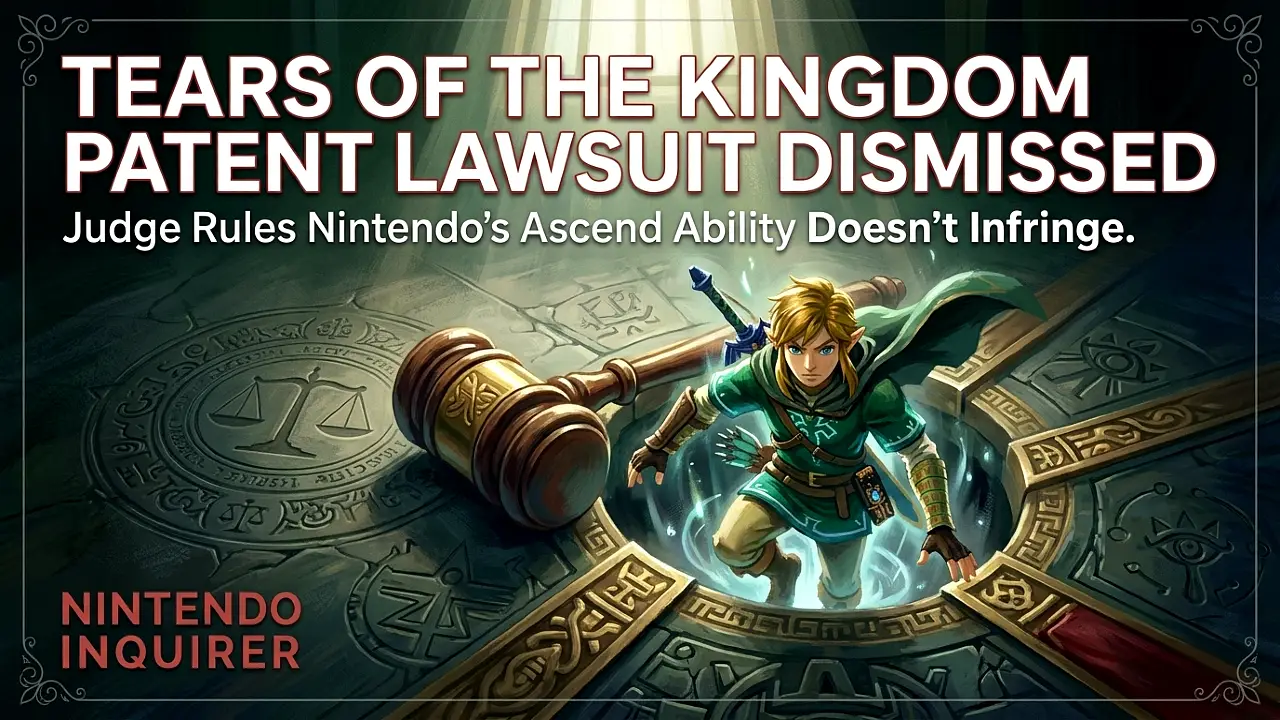
A U.S. District Judge has dismissed a patent infringement lawsuit that targeted one of The Legend of Zelda: Tears of the Kingdom‘s most celebrated mechanics. The ruling, handed down on May 21, 2026, found that Nintendo’s Ascend ability does not infringe on a patent held by a Rhode Island inventor, bringing a two-year legal battle closer to resolution.
The decision turns on a surprisingly specific distinction: what happens to the character’s body when it passes through a ceiling.
The Case: Who Sued Nintendo and Why
The lawsuit was filed in the U.S. District Court for the District of Rhode Island by Romund Technologies LLC, a company founded by inventor Thomas J. Romund. Romund holds U.S. Patent No. 11,730,301, titled “Method and Apparatus for Real-Time Vehicle Traversal,” which he filed in 2020 and was granted in 2023.
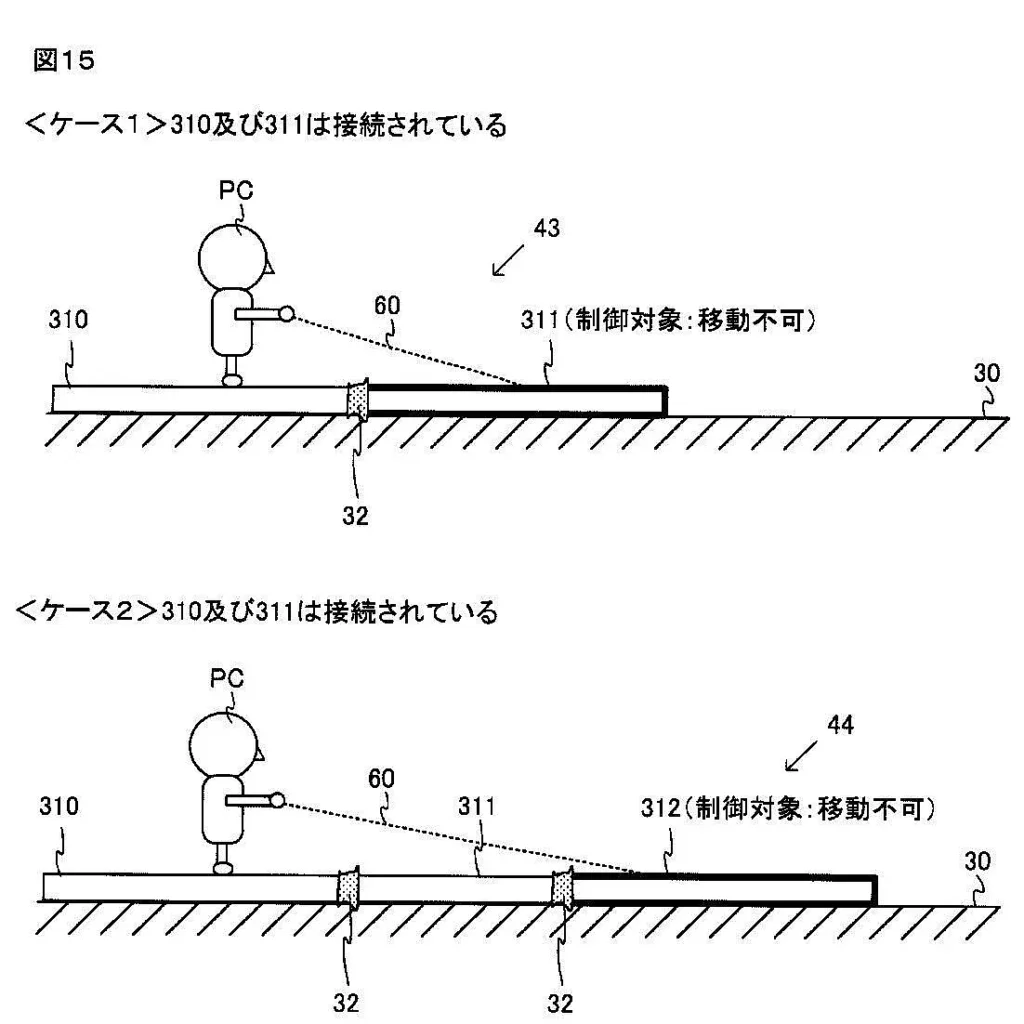
The patent describes a system where a character passes through a solid ceiling by first jumping into the air and becoming “indistinct” (stored in an intermediate state) while the ceiling above is highlighted. When the ceiling turns from a first color to a second color, the character completes the traversal and emerges on the other side.
Romund pointed directly at Tears of the Kingdom, arguing that Link’s Ascend ability — where the hero swims upward through cave ceilings, stone overhangs, and dungeon architecture — violated his intellectual property.
The lawsuit sought damages and an injunction against further sales of the game, which had already sold over 20 million copies by the time the case was filed.
The Judge’s Analysis: Why Nintendo Won
District Judge William E. Smith presided over the case and ultimately sided with Nintendo. His reasoning hinged on a single critical distinction between the patented method and Link’s in-game animation.
The Key Difference: “Indistinct” vs. Visible
Romund’s patent describes a character that becomes “indistinct” — meaning the character is no longer visible and exists in an intermediate state while the ceiling highlight animation plays. The character is essentially removed from view, stored as data, and then restored once the traversal completes.
Link does not work this way.
In Tears of the Kingdom, Link remains fully visible throughout the entire Ascend animation. Players watch him swim upward, his body clearly rendered as it passes through the stone. He does not disappear into an intermediate state. He does not become stored data. He remains Link — visible, animated, and very much on screen — from the moment he activates the ability to the moment he emerges on the surface above.
Judge Smith’s ruling states:
“Here, a person of ordinary skill in the art would understand that the phrase ‘determining that the character becomes indistinct’ precludes the character from being visible. The undisputed facts show that Link is visible during the Ascend animation in the Accused Games. Therefore, Link does not become ‘indistinct,’ and Nintendo does not infringe.”
The “First” and “Second” Colors
The patent also specifies that the ceiling must change from a first color to a second color to indicate that traversal is complete. In Tears of the Kingdom, the highlighted ceiling area does not change color — it remains a consistent green throughout the ability’s use. This provided a second, independent reason for the judge to rule in Nintendo’s favor.
Why the “Indistinct” Distinction Matters
The ruling is a masterclass in how patent law works at the granular level. Romund’s patent did not broadly claim ownership of the idea of passing through a ceiling. It claimed a very specific method: the character becomes indistinct, the ceiling changes color, the character reappears.
Nintendo’s method is different in both respects. The character remains visible. The ceiling stays green. The core idea — moving upward through solid matter — is the same. But patent law protects specific implementations, not broad concepts.
This is why Nintendo won.
| Element | Romund Patent | Tears of the Kingdom |
|---|---|---|
| Character State During Traversal | Becomes “indistinct” (not visible) | Remains fully visible throughout |
| Ceiling Indicator | Changes from first color to second color | Stays a consistent green |
| Initial Action | Character jumps into the air | Link swims upward from the ground |
The Backstory: An Inventor Who Tried to Warn Nintendo
The lawsuit’s backstory adds a layer of drama to the legal proceedings that goes beyond dry patent analysis.
Thomas Romund claims he conceived of the traversal method years before Tears of the Kingdom was announced. According to court documents, he attempted to contact Nintendo directly on multiple occasions to discuss his invention and explore a potential collaboration.
Nintendo never responded.
When Tears of the Kingdom launched in May 2023 and Romund saw Link swimming upward through solid rock, he believed the company had taken his idea without credit, without compensation, and without even acknowledging his outreach. The lawsuit followed.
Romund did not ask the court to quietly settle the matter. He sought damages and an injunction — a legal order that would have forced Nintendo to stop selling the game until the dispute was resolved. For a title that had already become one of the Switch’s best-selling games, the stakes could not have been higher.
The Appeal: This Isn’t Over Yet
Judge Smith’s ruling dismisses the case, but Romund Technologies has already filed an appeal. The legal battle is not finished, and it could take months or longer for the appeal to be resolved.
Patent appeals are notoriously unpredictable. Romund’s legal team will need to convince a higher court that Judge Smith’s interpretation of “indistinct” was too narrow, or that other elements of the patent were infringed even if the specific “indistinct” requirement was not met.
For now, Nintendo has won this round decisively. The Ascend ability — one of the most creative and beloved additions to Tears of the Kingdom‘s gameplay — remains untouchable.
The game, meanwhile, continues to sell. It is widely available on the original Nintendo Switch and fully playable on the Nintendo Switch 2 via backward compatibility, where it benefits from the system’s Handheld Mode Boost for improved performance.
Not the Only Patent Lawsuit Nintendo Is Fighting
The Romund case is not an isolated legal headache for Nintendo. The company is currently defending itself in a separate patent lawsuit filed by Tcore Technology LLC over the Joy-Con 2 mouse functionality on the Nintendo Switch 2. That case was filed on May 9, 2026, in the same District of Rhode Island and claims the new Joy-Con controllers infringe on Tcore’s patent for “Computer Input Devices and Associated Methods for Operating a Computer.”
The fact that both cases are unfolding in the same Rhode Island court is notable. Patent holders often choose specific districts based on the court’s history with intellectual property cases, and Rhode Island has become an increasingly common venue for these disputes.
For a company that just raised the global price of the Switch 2 by up to 20% and is projecting a decline in hardware sales for the console’s second year, the legal distractions are unwelcome. But the Romund ruling suggests Nintendo’s legal team knows how to draw precise, technical distinctions that hold up under judicial scrutiny.
The Bottom Line
Thomas Romund believed Nintendo took his idea. Judge Smith looked at the patent, looked at the game, and identified two specific differences that were enough to dismiss the case: Link stays visible, and the ceiling does not change color.
The ruling is a reminder that patent law does not protect ideas. It protects implementations. Romund patented a specific method for passing through a ceiling — one where the character vanishes into an intermediate state — and Nintendo implemented a different method entirely. The core concept is the same. The legal execution is not.
Romund has appealed, so this story is not quite over. But for now, Link can keep swimming through stone.
About the Author