The past month has been a whirlwind of Nintendo rumors. A new Star Fox announcement in April. A full Ocarina of Time remake targeting holiday 2026. A shadow-dropped Luigi’s Mansion film. Yet as mid-April arrives with none of these predictions materializing, a new theory has taken hold among industry insiders: Nintendo is not just suffering leaks—it is manufacturing them.
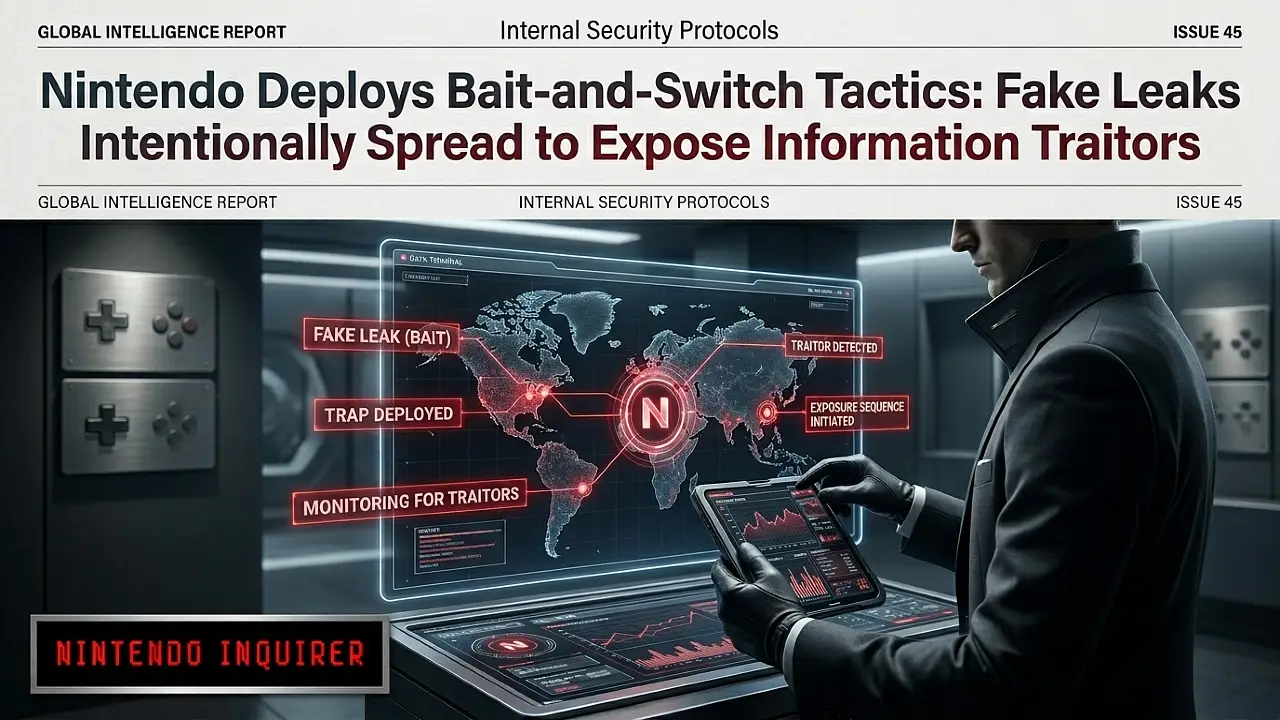
According to multiple sources close to Nintendo’s internal operations, the company has begun deliberately planting false information within different departments to identify precisely where information is escaping the building. If true, this represents one of the most aggressive anti-leak strategies in modern gaming history.

The Leak That Never Was
Let’s rewind to early April 2026. Leaker Nate the Hate, who has a solid track record including accurate details on Oblivion Remastered and Nintendo’s Partner Showcase, claimed that a new Star Fox game would be announced in April via the Nintendo Today app.
The rumor gained traction. Multiple outlets covered it. Fans waited.
April is now half over. No Star Fox announcement. No Nintendo Today notification. No official acknowledgment of the project whatsoever.
Around the same time, reports emerged that a full remake of The Legend of Zelda: Ocarina of Time was targeting a holiday 2026 release. Former Nintendo of America PR manager Kit Ellis described the company as “absolutely furious” about the scale of the leak, which allegedly exposed “almost the entire future product line.”
But what if the fury was not about the leak itself—but about the fact that the leak was fake, and someone inside Nintendo still spread it?
The Honeypot Theory Explained
The concept is simple and has been used in other entertainment industries for decades.
How It Works:
- Nintendo creates a fake project—say, a Star Fox game targeting April 2026.
- The company distributes slightly different versions of this fake information to different teams or individuals.
- When the information appears publicly, Nintendo compares the leaked version against its internal distribution list.
- The source of the leak is identified based on which specific variant of the fake information surfaced.
Chinese gaming outlet 163.com reported on April 12 that Nintendo may be “internally spreading false information as a ‘fishing’ strategy to lock down leakers.” The report suggests that several recent high-profile rumors—including a Luigi’s Mansion film and a new game in the series—may have been intentionally fabricated as part of this operation.
The timing aligns. The Star Fox rumor came from a credible leaker. The Ocarina of Time remake was reported by multiple outlets. And yet, as of April 15, neither has been announced. Either both projects were delayed at the last possible moment, or they never existed in the first place.
Why This Strategy Makes Sense for Nintendo
Nintendo is famously secretive. The company’s marketing strategy relies heavily on surprise reveals, and leaks undercut that strategy at a fundamental level. When a Direct is spoiled days in advance, the actual presentation loses its impact.
In 2025 and early 2026 alone, Nintendo suffered multiple high-profile leaks:
- Metroid Prime 4: Beyond gameplay and story details surfaced weeks before launch.
- Pokémon Legends: Z-A leaked in its entirety ahead of the official reveal.
- Tomodachi Life: Living the Dream physical copies appeared online before the April 16 release date.
For a company that values control over its messaging, this pattern is unsustainable. The honeypot strategy is a logical escalation.
The Cost of Doing Nothing:
If Nintendo simply tightened security without active countermeasures, leakers would adapt. By flooding the information pipeline with falsehoods, Nintendo creates an environment where even credible leakers cannot trust their sources—and where internal employees know that sharing information carries a genuine risk of exposure.
The Collateral Damage: What This Means for Leakers and Fans
If the honeypot theory is correct, it has immediate implications for how fans consume Nintendo rumors.
| Group | Impact |
|---|---|
| Leakers | Sources become unreliable. A tip that sounds legitimate may be a planted fake designed to identify the leaker’s contacts. |
| Fans | All rumors must now be treated with increased skepticism. Even reports from historically accurate sources may be compromised. |
| Nintendo | Short-term confusion, but long-term control over the narrative. The company reclaims the surprise factor. |
The Credibility Problem:
Nate the Hate has been reliable in the past. If the Star Fox rumor turns out to be a honeypot, it does not necessarily mean the leaker was intentionally misleading fans. It may mean their source was fed false information without knowing it.
This creates a chilling effect across the entire leak ecosystem. If a reliable leaker can be burned by a fake tip, who can be trusted?
What Was Real and What Was Bait?
With the honeypot theory in play, we need to reassess every major Nintendo rumor from the past month.
| Rumor | Likelihood (Post-Honeypot) | Notes |
|---|---|---|
| Star Fox announcement in April | Low | April is half over; no announcement. Strong honeypot candidate. |
| Ocarina of Time remake (holiday 2026) | Moderate | Reported by multiple credible sources; may be real but deliberately misdated to identify leakers. |
| Luigi’s Mansion film / new game | Very Low | 163.com specifically flagged this as potential bait. |
| 3D Mario delayed to 2027 | High | Consistent across multiple reports; likely genuine. |
| New Switch Sports follow-up | Unknown | Insufficient data to assess. |
The key takeaway is that absence of evidence is now evidence of something. If a hyped rumor fails to materialize by its predicted window, it was either delayed at the last second or was never real to begin with. The honeypot theory suggests the latter is increasingly likely.
The “Super Angry” Reaction in Context
Kit Ellis, the former Nintendo PR manager, described the company as “super angry” about recent leaks. At the time, this was interpreted as frustration over genuine secrets being exposed. But Ellis’s wording leaves room for another interpretation.
If Nintendo had simply been the victim of a massive leak, the reaction would be frustration and damage control. If Nintendo had been running a sting operation and someone still leaked the fake information, the reaction would be different. That is not frustration—that is confirmation that the honeypot worked.
A company that knows it has a leak problem but does not know where the leak is coming from is anxious. A company that has just identified the exact source of a leak is vindicated.
What Comes Next?
Nintendo is unlikely to acknowledge the honeypot strategy publicly. Doing so would undermine its effectiveness. The best confirmation will come from patterns over time.
Signs to Watch For:
- Rumors that never materialize: If a credible leaker predicts something that simply never happens, consider the possibility that the leaker was fed bait.
- Sudden silence from previously active leakers: If sources dry up, it may indicate that insiders are afraid of being caught in a honeypot.
- Nintendo’s official communication cadence: If the company suddenly has fewer genuine leaks ahead of major events, the strategy is working.
The Fan’s Guide to Navigating This:
- Treat all rumors as entertainment, not fact.
- Do not make purchasing decisions based on unconfirmed leaks.
- Wait for official Nintendo announcements before getting excited about a project.
FAQ: Understanding the Honeypot Strategy
Q: Has Nintendo used this tactic before?
A: There is no confirmed precedent, but companies like Marvel Studios and HBO have used similar strategies to protect major reveals. Nintendo’s silence on the matter is consistent with how these operations are typically run.
Q: Does this mean all Nintendo leaks are fake?
A: No. Some leaks—such as the existence of Pokémon Champions and Tomodachi Life: Living the Dream—were accurate and confirmed. The honeypot strategy targets specific high-value secrets by mixing fake information among real projects.
Q: How can I tell if a rumor is real or bait?
A: You cannot. That is the point of the strategy. The only way to know for certain is to wait for an official Nintendo announcement.
Q: Will this stop leakers permanently?
A: Probably not. Leakers will adapt, sources will become more cautious, and the cat-and-mouse game will continue. But the honeypot strategy raises the risk for anyone sharing internal information, which may reduce the frequency and accuracy of leaks over time.
The Bottom Line
Nintendo is done playing defense. By planting false information inside its own walls, the company has turned every potential leaker into a potential trap. The Star Fox rumor that dominated early April 2026 may never have been about a new game at all. It may have been about finding the person who could not keep a secret.
For fans, this means returning to an older, simpler relationship with Nintendo news: wait for the Direct. Everything else is noise—and some of that noise was designed to catch someone in the act.
Do you think the honeypot theory holds up? Have you been burned by a fake Nintendo rumor before? Let us know in the comments.
About the Author