Pokémon Pokopia launched exclusively for the Nintendo Switch 2 on March 5, 2026. The vast majority of games, even excellent ones, sell best during their first two to three weeks and then gradually slide down the charts as new releases arrive.
Pokémon Pokopia is not following that script.
More than seven weeks after launch, it remains the number one best-selling game on the Nintendo Switch 2 eShop, fending off brand-new, highly-praised titles including Pragmata, Mouse: P.I. For Hire, and Mario Kart World. In Japan, physical retail sales have now exceeded 910,000 units, according to the latest Famitsu data for the week ending April 19, 2026. Globally, the game surpassed 2.2 million units within its first four days on sale.
This is not normal. Here is exactly what is happening.
[IMG: Pokémon Pokopia key art showing Pokémon characters in a cozy village setting. ALT TEXT: Promotional artwork for Pokémon Pokopia featuring Pikachu and other Pokémon in a vibrant, customizable village.]
The Numbers: Seven Weeks of Dominance
The Switch 2 eShop charts for the week ending April 26, 2026, tell a clear story.
| Rank | Game | Release Date |
|---|---|---|
| 1 | Pokémon Pokopia | March 5, 2026 |
| 2 | Mouse: P.I. For Hire | April 2026 |
| 3 | Pragmata | April 17, 2026 |
| 4 | Mario Kart World | June 2025 |
| 5 | Pokémon Legends: Z-A – Switch 2 Edition | October 2025 |
Pragmata briefly dethroned Pokopia on a single day, April 25, according to European eShop tracking, but Pokopia reclaimed the top spot for the full week.
The Japanese physical retail charts reinforce the same pattern. Pokémon Pokopia sold an additional 19,096 physical copies during the week of April 13–19, bringing its lifetime Japanese physical total to 910,005 units. That is physical retail only, in a single territory, and it does not include digital eShop downloads.
The game also charted among the top five best-selling titles in the United States for April 2026.
What Kind of Game Is Pokémon Pokopia?
Part of the explanation for the game’s endurance lies in what it actually is. Pokémon Pokopia is not a traditional Pokémon RPG. There are no gym badges, no Elite Four, no turn-based battles.
Instead, it is a cozy life simulation in which players work alongside Pokémon to build and customize their own worlds. The game has drawn consistent comparisons to Animal Crossing for its low-pressure, creative sandbox structure, but with the Pokémon roster and visual charm layered on top.
Core Gameplay Loop:
| Feature | Description |
|---|---|
| Town Building | Create and customize Palette Town, the main sandbox area |
| Habitat Creation | Build environments that attract specific Pokémon species |
| Crop Cultivation | Till fields and grow crops with help from Pokémon pals |
| Real-Time Day/Night Cycle | The world changes based on actual time of day |
| Photography | Capture fun moments with Pokémon in the wild |
Multiplayer Options:
Nintendo detailed the game’s multiplayer features in an official post on April 17. Players can visit a friend’s town, invite others to their own world, or play together on a shared Cloud Island. Up to four players can join forces locally or online, and each visit allows friends to help develop Palette Town, the game’s central sandbox area.
This social layer is critical to understanding the game’s longevity. Games like Animal Crossing: New Horizons demonstrated that social creativity—visiting friends, showing off your designs, collaborating on projects—generates organic word-of-mouth marketing that no paid campaign can replicate. Pokémon Pokopia taps into the same dynamic.
[IMG: Screenshot of Pokémon Pokopia multiplayer gameplay showing multiple players in a customized town. ALT TEXT: Pokémon Pokopia gameplay screenshot showing multiplayer mode with players collaborating in Palette Town.]
Critical Reception: The Best-Reviewed Game of 2026 So Far
Strong sales make a game a hit. Strong reviews make it a sustained hit. Pokémon Pokopia currently holds an 88 out of 100 on Metacritic, making it the best-reviewed title of 2026 to date alongside Resident Evil Requiem and the indie title Mewgenics.
| Outlet | Verdict |
|---|---|
| VGC | “An excellent life simulation game that takes the best bits from the champions of the genre” (5/5) |
| ComicBook.com | “The best Pokémon game in years… feels rooted in the world of Pokémon” |
| GamesIndustry.biz | “A breath of fresh air to have a spin-off that adds so much to the already-teeming world of Pokémon” |
| MonsterVine | “One of the standout games of the Nintendo Switch 2 and of the year” |
| PCMag | “A cozy, violence-free romp full of video games’ most marketable animals” |
The critical consensus is unusually unified. Reviewers consistently praise the game’s charm, its addictive gameplay loop, and its ability to feel both fresh and deeply connected to the Pokémon universe despite abandoning the series’ traditional mechanics.
Why It Keeps Selling: The Three-Factor Theory
Chart dominance that lasts nearly two months does not happen by accident. Three specific factors explain Pokémon Pokopia‘s staying power.
Factor 1: The Switch 2 Install Base Effect
Pokémon Pokopia is a Nintendo Switch 2 exclusive. It cannot be played on the original Switch, on PC, on PlayStation, or on Xbox. This means every single person who buys a Switch 2 and wants a Pokémon game must buy Pokopia. There is no alternative platform. There is no cheaper way in.
As the Switch 2 install base grows week by week, Pokopia picks up new buyers automatically. It is the de facto Pokémon experience on the new hardware, and that position will not change until another major Pokémon title arrives.
Factor 2: The Cozy Game Audience Does Not Shrink
Cozy games—Animal Crossing, Stardew Valley, Disney Dreamlight Valley—do not follow the same sales curve as action games or RPGs. Players do not finish them in a weekend and move on. They play for months, often daily, and they talk about their creations with friends.
Pokémon Pokopia sits squarely in this genre. The real-time day/night cycle means the game world changes depending on when you play, and players who log in at night only see sleeping Pokémon, which creates a distinct rhythm that rewards daily check-ins. This kind of design generates sustained engagement, and sustained engagement generates sustained sales.
Factor 3: Post-Launch Support and Multiplayer Visibility
Nintendo’s official multiplayer explainer, published on April 17, 2026, gave the game a second wave of visibility more than a month after launch. By detailing exactly how Cloud Islands, town visits, and cooperative building work, Nintendo reminded players—and informed potential buyers—that Pokopia is a social experience, not a solitary one.
Combined with the existing Mystery Gift promotion, which rewards early purchasers with an exclusive in-game Ditto rug, Nintendo has kept Pokopia in the news cycle well beyond its launch window.
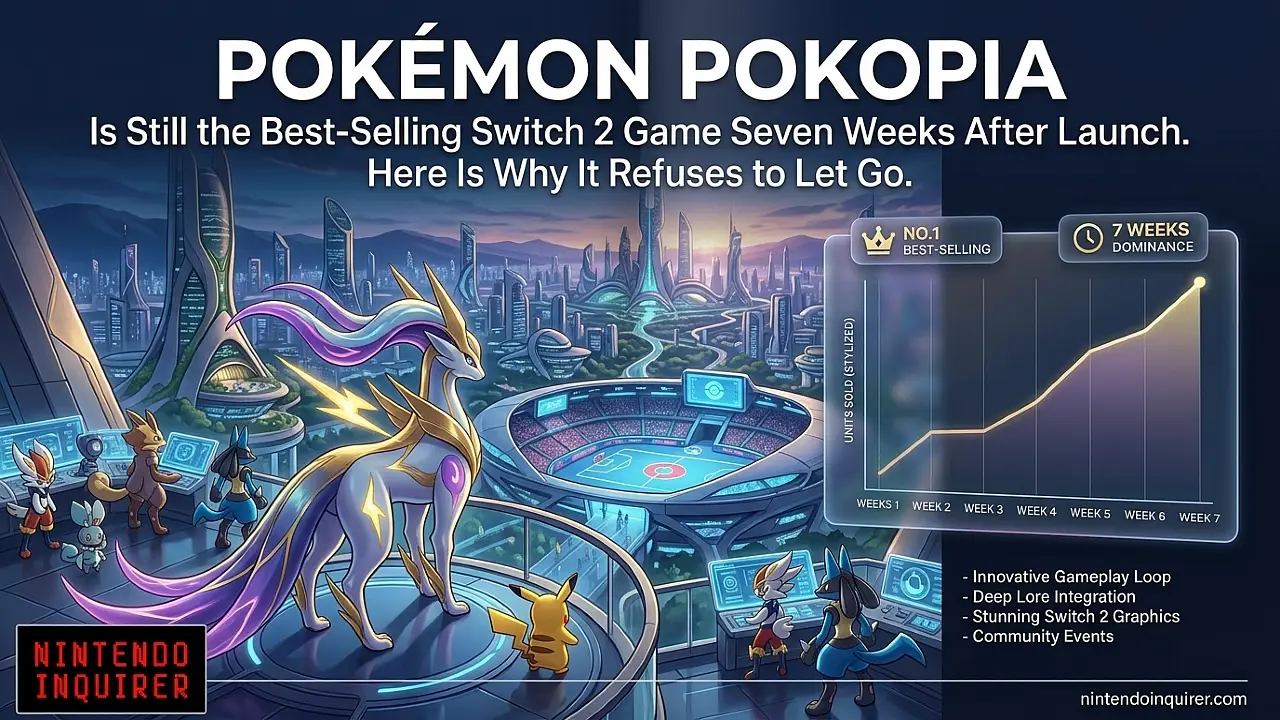
[IMG: Pokémon Pokopia eShop chart position graphic showing number one ranking for seven weeks. ALT TEXT: Graphic showing Pokémon Pokopia at number one on the Nintendo Switch 2 eShop charts for seven consecutive weeks.]
The Two New Releases That Tried to Knock It Down
Mouse: P.I. For Hire
A stylish first-person shooter wrapped in 1930s cartoon aesthetics, Mouse: P.I. For Hire has been a critical success in its own right. Nintendo Life praised it as “a bold, risk-taking FPS, and a fine achievement” that “feels fresh and fun.” The game’s unique visual identity—hand-drawn rubber-hose animation paired with noir detective storytelling—has earned it a passionate following.
It debuted at number two on the Switch 2 eShop charts.
Pragmata
Capcom’s long-awaited sci-fi action-adventure launched on April 17, 2026, with considerable hype. The Digital Foundry tech review noted that the Switch 2 version “has some noticeable cutbacks” compared to PS5, including lighting downgrades and simplified textures, but the game still manages to run at a stable 30fps in handheld mode and approaches 60fps in docked mode.
Pragmata reached number two on the charts and briefly took the number one spot on April 25, but it could not hold the position for the full week.
Both games are excellent. Neither has dethroned Pokopia for a full chart week.
What Happens Next?
Pokémon Pokopia will eventually lose the number one spot. No game stays on top forever. But the question is not when it will fall—it is what will finally push it off.
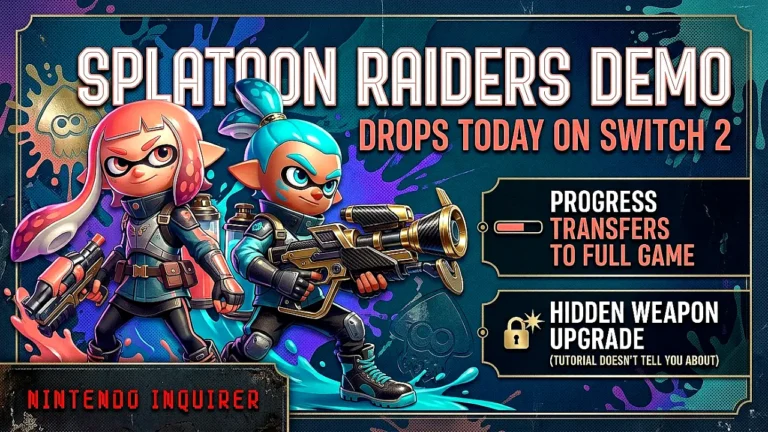
The most likely candidates are not individual titles. Splatoon Raiders arrives on July 23, 2026, and will undoubtedly sell well, but it targets a different audience. The real challenge to Pokopia‘s dominance may come from Animal Crossing: New Horizons – Nintendo Switch 2 Edition, which already ranks at number 16 on the eShop charts and appeals to the exact same cozy-life-simulation audience.
For now, Pokémon Pokopia remains where it has been since March 5: at the top, looking down.
FAQ: Common Questions About Pokémon Pokopia’s Success
Q: Is Pokémon Pokopia exclusive to Nintendo Switch 2?
A: Yes. It cannot be played on the original Nintendo Switch or any other platform.
Q: How many copies has Pokémon Pokopia sold?
A: Global sales surpassed 2.2 million units in the first four days. In Japan, physical sales alone have exceeded 910,000 units as of April 19, 2026.
Q: Does Pokémon Pokopia have multiplayer?
A: Yes. Up to four players can visit each other’s towns, collaborate on building projects, or play on a shared Cloud Island locally or online.
Q: Is there an early purchase bonus?
A: Yes. Players who purchase the game can claim an exclusive in-game Ditto rug via the Mystery Gift feature.
Q: What makes Pokémon Pokopia different from other Pokémon games?
A: There are no traditional Pokémon battles. It is a cozy life simulation focused on building, creativity, and living alongside Pokémon.
Q: Will Pokémon Pokopia come to the original Nintendo Switch?
A: Nintendo has not announced any plans for an original Switch version.
The Bottom Line
Pokémon Pokopia is a genuine phenomenon. It launched as the best-reviewed game of 2026 and has spent every week since proving that critical acclaim and commercial success can coexist. The cozy-life-simulation genre rewards long-term engagement, and Pokopia has the Pokémon brand, the social features, and the exclusive-platform status to convert that engagement into sustained chart dominance.
New releases will continue to arrive. Pragmata and Mouse: P.I. For Hire have already tried and failed to claim the throne for more than a day. Something will eventually unseat it—but seven weeks in, Pokémon Pokopia is not just winning. It is making it look easy.
Have you been playing Pokémon Pokopia? What does your Palette Town look like? Let us know in the comments.
About the Author